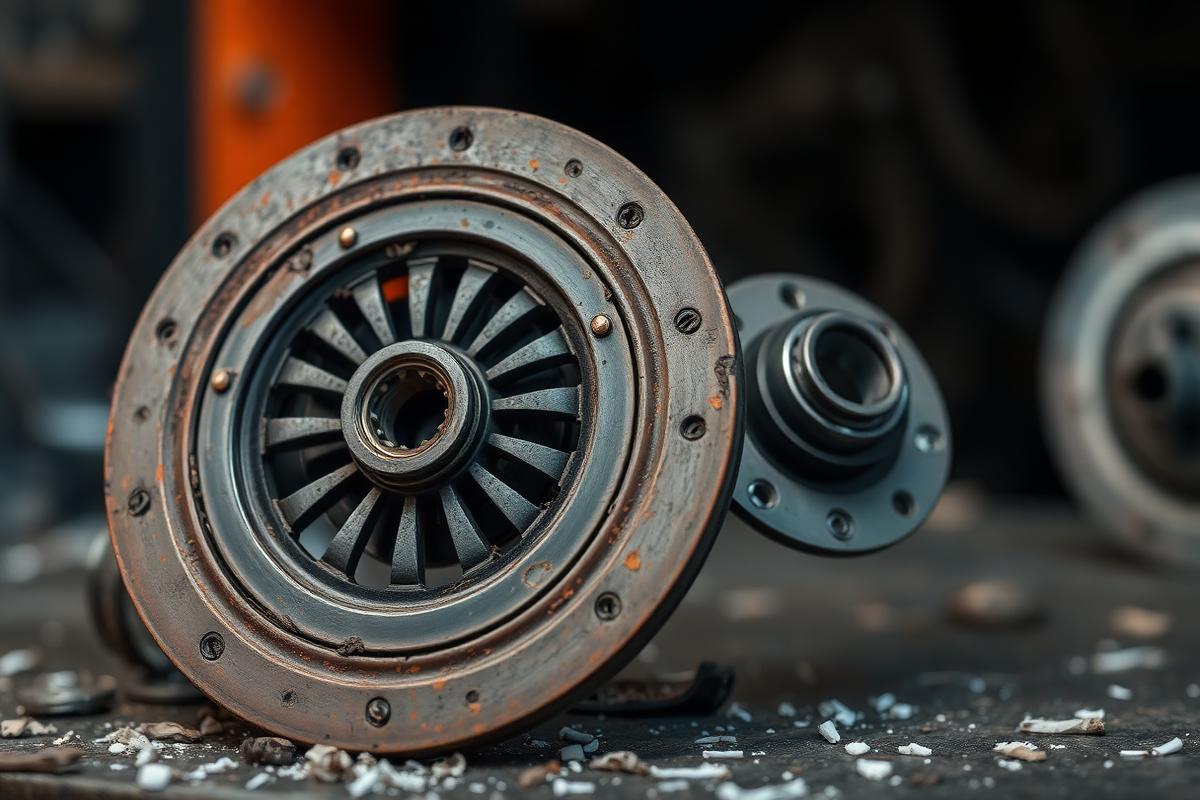
Which Ford cars and vans does this clutch guide cover?
This guide is for Ford vehicles with a conventional manual gearbox and clutch pedal. Relevant applications include manual Focus, Fiesta and Mondeo cars and manual Transit, Transit Custom and Connect vans, but not every version has the same drivetrain. The registration, model year and gearbox identify the job more accurately than a badge alone. Tell us about previous clutch, flywheel or gearbox work so a non-standard arrangement is not overlooked when identifying parts and agreeing the scope.
Our Focus and Fiesta clutch guide and Transit clutch guide provide model context. The separate Ford DMF page addresses flywheel-specific symptoms. This combined manual clutch guide explains how those findings fit into a complete job: confirming release operation, assessing the friction components and deciding whether the flywheel can be retained rather than treating clutch and flywheel replacement as an inseparable package.
What distinguishes a slipping Ford clutch from a release fault?
A slipping manual clutch allows the revs to rise without road speed increasing in proportion while the pedal is released. A burning friction smell can accompany it. A release fault can instead make gears difficult to select because the clutch does not disengage fully when the pedal is pressed. Those are different complaints and may need different work. A high biting point is worth reporting, but it should not be treated as enough evidence to order a complete clutch kit.
Describe whether the problem appears on an incline, after a gear change, when warm or while moving off. Avoid deliberately repeating a slipping event to prove the diagnosis because that adds heat. Our clutch symptoms guide sets out the difference between slip, drag and judder. If the pedal is heavy or stays down, release-system and hydraulic checks matter as much as the friction plate; a new plate alone will not resolve a fluid leak.
Why can a Ford judder or rattle have more than one cause?
Judder on take-up can result from uneven clutch engagement, contamination, mounts, release-system behaviour or a worn dual mass flywheel where fitted. A noise that changes with pedal position can also involve bearings or the manual gearbox. These symptoms guide assessment but do not prove that one component is worn. Say whether the judder happens in first gear, reverse or both, and whether it stops once the clutch is fully engaged. That description is more useful than simply requesting a flywheel.
We consider the whole clutch and gearbox connection before recommending replacement. Oil reaching the friction surface can make a clutch slip or engage unevenly; leaving the source of contamination in place can undermine replacement parts. Mount movement can be mistaken for clutch judder too. Where the evidence points further back in the drivetrain, our manual gearbox assessment service separates a cost-effective repair from a gearbox replacement rather than assuming a clutch kit will cure every noise.
How is a fitted Ford dual mass flywheel assessed?
First, the flywheel type is identified. Some applications use a solid flywheel and others a dual mass unit, so the same test cannot be applied indiscriminately across the range. A dual mass flywheel intentionally allows movement between its masses to reduce rotational vibration. With the gearbox removed, movement and rock are measured against the relevant specification and the friction face is examined. Heat damage, scoring, grease loss and other deterioration contribute to the decision; movement alone is not a fault verdict.
A serviceable flywheel can remain with a new clutch. A worn or damaged unit needs to be considered alongside the kit so the new friction components are not fitted against the same problem surface. Our DMF assessment guide explains the principle. Shared gearbox removal makes it sensible to inspect both components together, but that access does not justify replacing a good flywheel. We explain the findings and any additional work before proceeding.
Why do Ford car and van clutch jobs need different parts?
A Focus and a Transit should not be quoted from one generic Ford kit. Gearbox layout, release mechanism, clutch specification and access differ, and variations exist within each model range. Transit, Transit Custom and Connect are not interchangeable descriptions of the same vehicle. A van used with loads or for towing also has a different use history from a lightly loaded car. Tell us about that history so the symptoms and any previous conversions can be considered accurately.
Where a hydraulic release bearing or concentric slave cylinder is fitted inside the bellhousing, access to it is part of the clutch job. Its condition and the applicable replacement procedure need to be considered while the gearbox is removed. Leaks, release faults and damaged friction surfaces affect the scope. A previously fitted solid-flywheel conversion should be declared too: its parts and vibration characteristics can differ from the original dual mass arrangement, so it cannot be assessed as if nothing has changed.
When is manual gearbox work needed instead of clutch replacement?
Gear selection problems, whining or jumping out of gear can come from the gearbox or its linkage rather than worn clutch friction material. Clutch drag can overlap with selection complaints, which is why assessment comes first. We repair manual gearboxes only where the fault and cost make that sensible; otherwise replacement is the usual route. This page is about conventional manual clutch, DMF and gearbox work and should not be used to quote a transmission-controlled clutch system without a pedal.
For an automatic vehicle, use the separate automatic transmission replacement service; failed automatic units are replaced, never repaired or rebuilt. For your manual Ford, we give a fixed quote after assessment rather than an unsupported make-wide price. The clutch cost guide explains how parts, release components and access influence the quote.
How should you arrange a Ford clutch assessment in Manchester?
Send the registration, model, approximate mileage, symptoms and any relevant previous work to Manchester Clutch Specialist. Mention leaks, difficulty selecting a particular gear and whether the clutch pedal returns normally. The workshop is at Lancaster Works, Kingsbridge Road, Manchester M9 5SP, serving Manchester and the surrounding areas. Check your price or call 07480 657874 to discuss an assessment based on the vehicle rather than a replacement package chosen from its badge.
If the car or van cannot select gears reliably, loses drive or develops severe grinding or vibration, stop somewhere safe. Do not force the lever or keep slipping the clutch to make the vehicle move. The customer arranges recovery when the vehicle cannot be driven safely; contact us before delivery to agree the details. No general guide can guarantee that a particular fault is safe for the journey, so explain its current condition before planning to drive to the workshop.