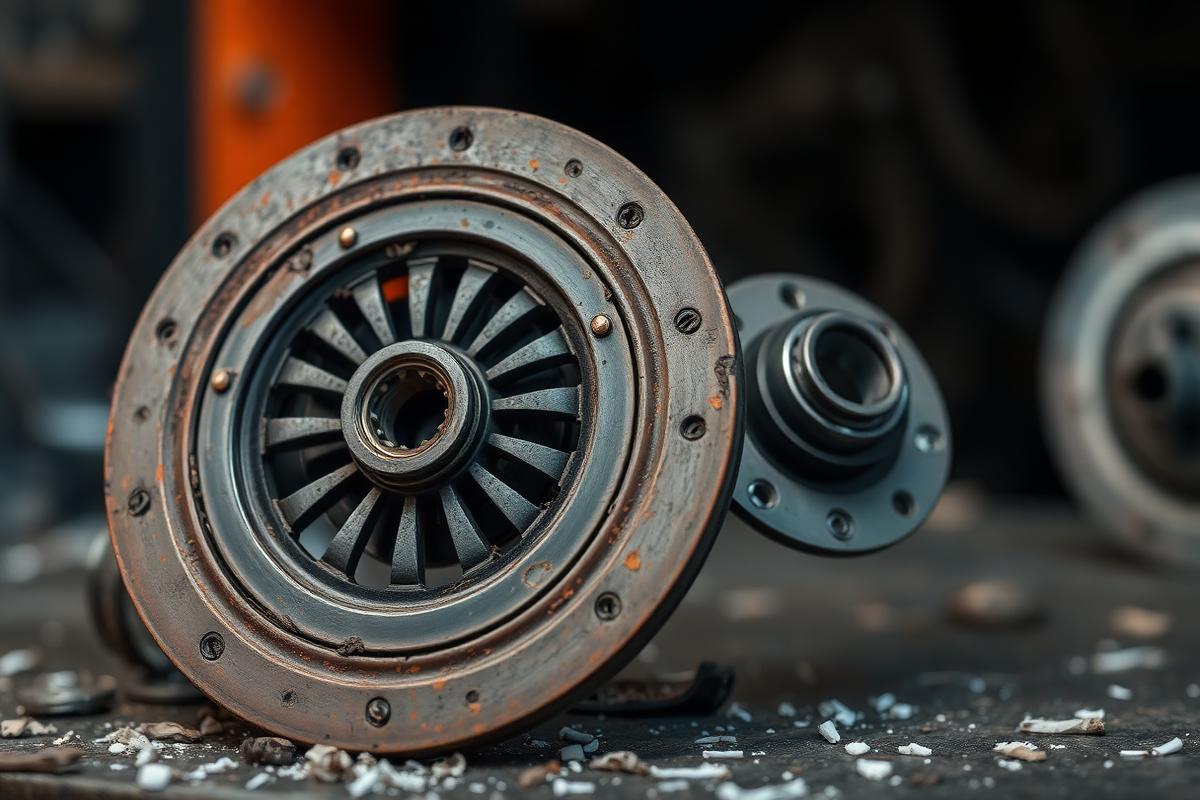
Drivers describe it in different ways — scorched paper, hot brakes, burning hair, electrical burning — but the sensation is the same: a sudden, unpleasant smell that appears after pulling away hard, climbing a hill, towing, or crawling through Manchester traffic. Unlike a slow oil leak or a worn tyre, a burning clutch smell tends to arrive quite quickly and gets worse rather than better.
It is one of the more reliable symptoms in this trade, because there is really only one thing that produces that specific smell: friction material overheating as it slips against the flywheel and pressure plate instead of gripping cleanly.
What causes the smell
The clutch works by clamping a friction plate tightly between the flywheel and the pressure plate, transferring engine power to the gearbox with no slip once the pedal is fully released. When that clamping force is insufficient, or the friction material has worn thin, the plate slips against the flywheel surface under load. That slip generates heat in the same way rubbing your hands together does, and the friction material starts to smell as it heats.
- A worn friction plate. The most common cause. As the lining thins, the clamping force drops and slip increases, especially under load.
- Riding the pedal. Resting a foot on the clutch, even lightly, keeps the plate partially disengaged and causes continuous low-level slip and heat.
- Frequent hill starts or towing. Extra load asks more of a clutch that may already be marginal, and can produce the smell even when some life is left.
- Oil contamination. A leaking rear crankshaft seal or gearbox input seal lets oil reach the friction plate, reducing grip and increasing slip and heat.
- A weak pressure plate spring. Less common, but a pressure plate that has lost clamping force will let the plate slip even when the friction material is still serviceable.
Is it safe to drive?
You can usually get the car home or to a workshop, but you should not carry on driving normally once you have noticed the smell repeatedly. The heat generated by a slipping clutch does not stay contained to the friction plate. It transfers into the flywheel, and on cars with a dual mass flywheel, sustained heat can damage the internal springs and bearing, or warp the friction surface on a solid flywheel. At that point a straightforward clutch replacement becomes a clutch and flywheel replacement, at meaningfully higher cost.
There is also a practical risk. A clutch that is slipping badly enough to smell can fail further with little extra warning, sometimes leaving you unable to pull away at all. If you smell burning on a motorway slip road or while towing, treat it as a reason to plan an inspection in the next day or two rather than wait and see.
How to tell if it really is the clutch
A quick way to narrow it down, somewhere safe and legal: with the handbrake firmly applied and the engine idling, select third or fourth gear and slowly raise the clutch pedal. A healthy clutch will stall the engine almost immediately. If the engine keeps running smoothly with the pedal fully up, the clutch is slipping and the burning smell has an obvious explanation.
Other smells can be mistaken for a burning clutch. Overheating brakes smell similar but usually appear after heavy braking rather than pulling away. A slipping auxiliary belt produces a higher-pitched squeal alongside the smell. If you are unsure, our clutch slipping and symptoms guide covers the related warning signs, including judder and a high biting point, which often accompany the smell.
What we check
When a car comes in with a reported burning smell, we road test it, then remove the gearbox to inspect the clutch and flywheel directly rather than guessing from the outside. That tells us definitively whether the friction plate has worn out, whether oil contamination is present, and — critically — whether the flywheel has already been damaged by the heat.
What we look for
- Friction plate thickness and condition, and any signs of glazing or scorching
- Flywheel surface for heat cracking, blueing or warping
- Dual mass flywheel free play and rock against manufacturer tolerances
- Rear crankshaft and gearbox input seals for oil contamination
- Pressure plate clamping force and release bearing condition
What it costs to fix
If the smell is caused by ordinary clutch wear, a standard clutch replacement typically costs between £450 and £850 fitted, depending on the vehicle and how much labour it takes to reach the gearbox. If the heat has also damaged the flywheel, replacing a dual mass flywheel adds roughly £300 to £600. Vans and four-wheel-drive vehicles tend to sit above these figures because of the extra work involved in accessing the gearbox.
We give you a fixed price after inspection, not a guess over the phone, and we show you the removed parts so you can see exactly what was worn or damaged.
Covering Manchester and the surrounding areas
We diagnose and repair burning clutch smells for drivers across Manchester, Salford, Oldham, Stockport, Trafford, Tameside, Rochdale, Bury, Bolton and the wider North West, with most straightforward clutch replacements completed in a single day. If the fault turns out to be further into the transmission, we also handle gearbox repair and replacement. Get in touch and describe the smell and we will tell you honestly what is likely going on before you book anything in.