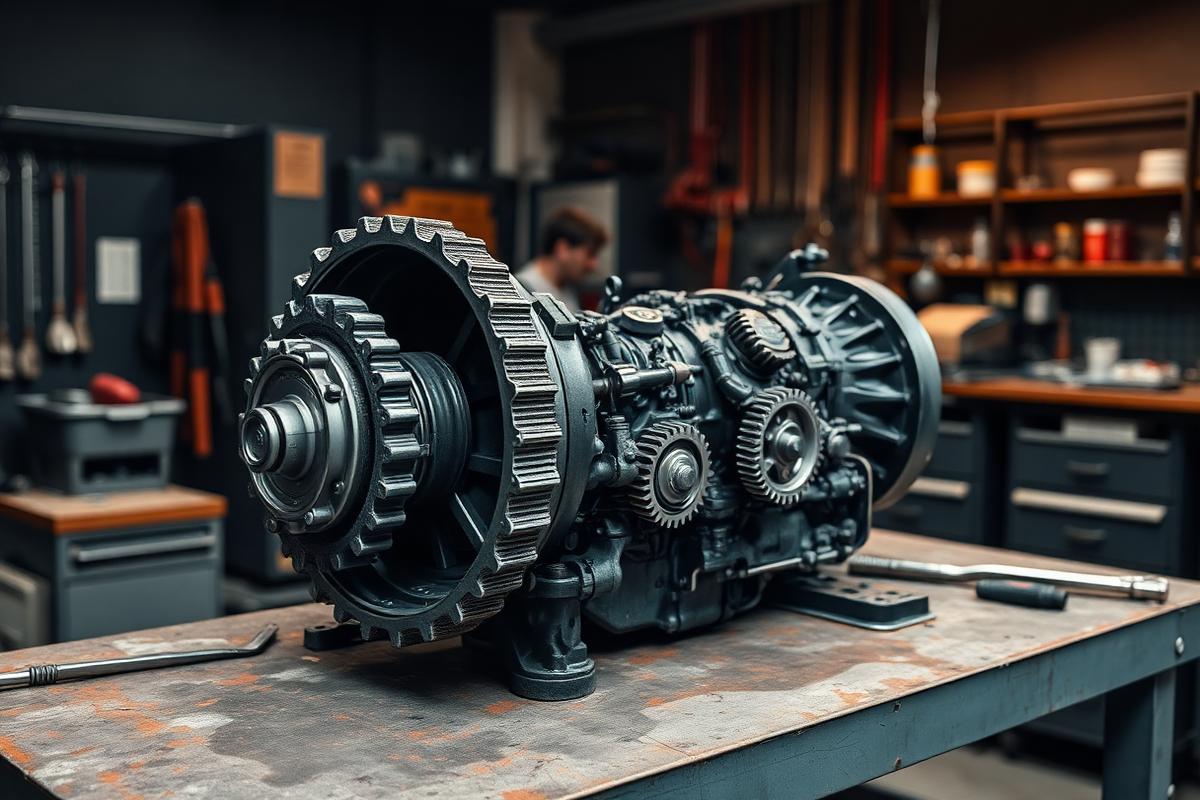
An automatic gearbox warning light rarely appears without reason. Unlike a vague dashboard message that might clear itself, a transmission fault light is generated by the transmission control unit actively detecting a condition outside its normal operating parameters. Often it arrives alongside limp mode: the car suddenly refuses to change up past a low gear, acceleration feels sluggish, and the engine revs high for the road speed.
What limp mode is and why it happens
Limp mode, sometimes called failsafe mode, is a deliberate response built into the transmission control unit. When it detects a fault that could lead to further internal damage if driving continued normally, it locks the gearbox into a single gear, usually second or third, and limits engine power. The intention is to let you drive the car gently to safety or to a workshop without risking catastrophic damage to the clutch packs, gears or torque converter inside. It is a symptom of an underlying fault, not the fault itself.
Common triggers
- Mechatronic or valve body faults. The mechatronic unit combines electronic control with the hydraulic valve body that directs fluid to engage each gear. Faults here are one of the most frequent causes of limp mode on modern automatic and DSG transmissions.
- Electrical solenoid faults. Shift solenoids control fluid flow to individual clutch packs and gear sets. A solenoid with a wiring fault, failed winding or sticking valve will produce a specific fault code and can trigger limp mode on its own.
- Speed sensor faults. Input and output speed sensors tell the control unit how fast each shaft is turning, information it needs to manage smooth shifts. A faulty sensor confuses the control unit's calculations and can prompt a protective response.
- Low or degraded transmission fluid. Automatic transmissions rely on fluid pressure to engage clutch packs correctly. Low or worn-out fluid causes slipping and pressure irregularities that the control unit will flag.
- Clutch pack slip beyond adaptation limits. The control unit continuously adapts to normal clutch pack wear. Once slip exceeds what that adaptation can compensate for, it registers a fault rather than continuing to mask it.
- Torque converter lock-up faults. The torque converter locks up at higher speeds to improve efficiency. A faulty lock-up clutch or its control solenoid can trigger fault codes and, in some cases, limp mode.
Why the transmission's own codes matter
The automatic gearbox has its own control unit, separate from the engine management system, with its own dedicated fault code library. A generic engine code reader, of the kind used for a basic MOT emissions check, is often blind to this system entirely, or returns only a vague transmission fault light with no useful detail. Proper diagnosis means connecting to the transmission control unit specifically and reading the codes it has actually logged, which point at a specific solenoid, sensor, clutch pack or hydraulic circuit rather than the transmission in general.
Clearing a fault code without this step removes the warning light temporarily but does nothing about the underlying condition. The control unit will detect the same fault again under the same conditions and return to limp mode, often within a very short drive, and in the meantime the underlying cause has had longer to cause damage.
Is it safe to drive?
You can usually drive a short distance in limp mode to reach a workshop, keeping speeds low and avoiding hard acceleration or towing. Continuing to drive normally, or repeatedly clearing the code and carrying on as before, risks turning a contained electrical or sensor fault into clutch pack or mechanical damage that requires a full unit replacement rather than a targeted repair.
How we diagnose it
We connect directly to the transmission control unit to read its specific stored fault codes, then interpret those codes against live data such as fluid temperature, shift pressure and sensor readings rather than replacing parts speculatively. This tells us whether the fault is electrical, hydraulic, or mechanical wear inside the unit, and whether it is realistically containable or has progressed to the point that replacement is the only sound option.
What we check
- Transmission control unit fault codes and freeze frame data
- Fluid level, condition and colour
- Solenoid and sensor electrical resistance and wiring
- Shift pattern and torque converter lock-up behaviour on a road test
- Adaptation values against expected ranges for the vehicle
Why we replace rather than rebuild
Once diagnosis confirms a genuine internal fault, our approach is to replace the unit rather than attempt a rebuild. Modern automatic and DSG transmissions are built to extremely tight tolerances that need factory-level facilities to rework reliably, and a partial rebuild carries a real risk of early failure. Full detail on our approach is on our automatic transmission replacement page. We take the same approach with CVT transmissions and torque converter faults, diagnosing precisely, then fitting a replacement unit rather than rebuilding.
Covering Manchester and the surrounding areas
We diagnose automatic gearbox warning lights and limp mode faults for drivers across Manchester, Salford, Oldham, Stockport, Trafford, Tameside, Rochdale, Bury, Bolton and the wider North West. If your vehicle has a manual gearbox instead, our gearbox repair page covers that separately. Get in touch and describe the warning light or symptom and we will advise on next steps.