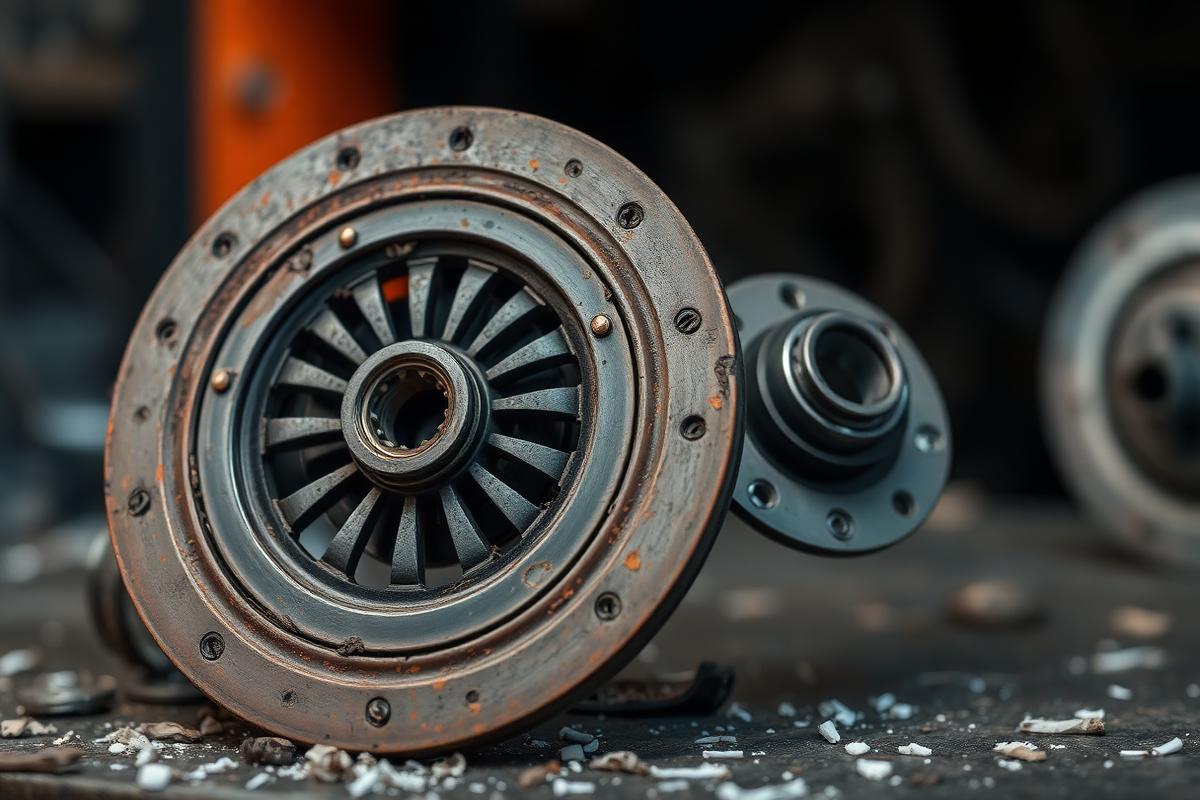
Which Hyundai models need a manual clutch assessment?
Hyundai has sold the i10, i20, i30, Kona, Tucson and Santa Fe with a mix of manual, automatic, dual-clutch and hybrid drivetrains, and the same model name can cover all of them across different years. This guide applies where the car actually has a conventional manual gearbox with a clutch pedal. We start with the registration, engine, year and transmission so the proposed job matches the vehicle in front of us, not the badge on the tailgate.
A manual Hyundai can have a solid flywheel or a dual mass flywheel depending on the application. The 1.6 CRDi diesel manuals commonly use a dual mass unit, while smaller petrol engines such as the 1.0 T-GDI often do not. It is not accurate to quote every Hyundai as a clutch-only job, or to assume every diesel needs a flywheel. Correct parts identification comes before a recommendation, and if a previous owner has converted the flywheel arrangement, tell us rather than assuming the car still matches its original specification.
Is a Hyundai DCT or hybrid the same as a manual clutch?
No. Hyundai's dual-clutch transmission, badged DCT, is an automatic gearbox with internal clutch packs and no clutch pedal. It is not a manual clutch replacement and is not priced or diagnosed like one. Hyundai hybrid and plug-in hybrid models also have no conventional pedal-operated friction clutch. If your car has two pedals and a selector showing P, R, N and D, this manual-clutch page does not apply to it.
If you are unsure what is fitted, send the registration and describe the pedals and selector. Our automatic transmission replacement page explains our service boundary clearly: we assess faults and replace failed automatic and dual-clutch transmissions, we do not repair or rebuild them. Getting the drivetrain identified correctly first avoids a slipping-clutch explanation being applied to a car that has no manual clutch at all.
What does a slipping Hyundai clutch feel like?
With a conventional manual gearbox, slipping means the engine revs rise but the car does not accelerate in proportion while the clutch pedal is fully released. A hot, acrid friction smell can accompany it, especially after a hill start or a period of stop-start traffic. Do not deliberately provoke slipping to confirm it, because each episode adds heat and wear. Tell us the conditions in which it already happens, such as pulling away on an incline, accelerating in a higher gear, or driving with the car loaded.
A high biting point can support the investigation but is not a complete diagnosis on its own. Pedal feel, the release system and the condition of the friction surfaces all need to be considered together. A Hyundai that is difficult to get into gear may instead have clutch drag, where the clutch is not fully disengaging. Our slipping, dragging and juddering guide separates those complaints so a new friction plate is not assumed to cure every pedal or gear-selection problem.
When does judder or a rattle point to the Hyundai flywheel?
Judder as the car moves off can come from uneven friction surfaces, oil contamination, worn mounts, release-system behaviour or a dual mass flywheel where one is fitted. A rattle or knock at idle that changes when you press the clutch pedal adds useful information, but it does not by itself prove the flywheel is worn, because release bearings and gearbox-related noises can overlap. Describe whether the symptom happens in first, reverse or both, and whether it disappears once the clutch is fully engaged.
On a Hyundai equipped with a dual mass unit, the flywheel dampens rotational vibration between the engine and gearbox, and it has designed-in movement. A visible amount of free movement is not automatically a fault. We compare measurements with the applicable specification rather than treating any movement as justification for a new part. Our dual mass flywheel guide explains why condition and measurement are more useful than buying a replacement on the strength of a noise alone.
What is checked before the old Hyundai flywheel is retained?
Once the gearbox has been removed, the clutch friction surface, flywheel face and release components can be inspected properly. On a dual mass flywheel, rotational free movement and rock are checked against the relevant part specification alongside surface damage, heat marks and signs of grease loss. A solid flywheel needs its own condition assessment rather than a DMF free-play test. Heat damage or oil contamination is taken seriously whichever type is fitted, because a contaminated surface will shorten the life of a new clutch.
A serviceable flywheel is not discarded merely because access has already been paid for. Equally, keeping a damaged flywheel can leave a new clutch working against the same problem surface, and the judder returns. We explain whether the evidence supports a clutch-only replacement or a combined job. The question about changing clutch and flywheel together covers the shared labour, without making replacement of both an automatic rule.
Why do i20 and Tucson clutch quotes differ?
A small manual hatchback and a larger manual family SUV do not use the same clutch kit, release mechanism or flywheel, and the labour to reach them differs too. Engine and gearbox variations within each Hyundai model add further differences, and on some layouts additional components have to be removed for access. A price quoted for somebody else's Hyundai should not be treated as a parts-and-labour promise for yours, even if the model name is the same.
Hydraulic faults and leaks also change the scope. Replacing a friction plate will not fix a leaking concentric slave cylinder by itself, and fitting a new clutch without addressing oil contamination can leave a repeat problem. If gear selection remains noisy or a whine follows road speed, the manual gearbox assessment service is relevant. Manual gearboxes are repaired only where cost-effective; otherwise replacement is the sensible route. Kia models share many of these drivetrains, and our Kia clutch and flywheel guide covers that range specifically.
How should you book a Hyundai clutch assessment in Manchester?
Contact Manchester Clutch Specialist with the registration, model, engine if known, approximate mileage and symptoms. Say whether the car has a clutch pedal, and mention any recent work, leaks or previous conversions. We give a fixed quote after assessment instead of inventing a Hyundai-wide price range. The clutch cost guide explains general cost factors, while a confirmed quote for your Hyundai depends on the exact specification and what we find.
The workshop is at Lancaster Works, Kingsbridge Road, Manchester M9 5SP. If the car cannot engage gears reliably, loses drive, or has severe vibration or grinding, stop somewhere safe and arrange recovery rather than attempting the journey. The customer arranges recovery; contact us before delivery so the details are agreed. For a driveable vehicle, discuss the fault before booking. Check your price or call 07480 657874 for an assessment based on the car, not a generic replacement package.