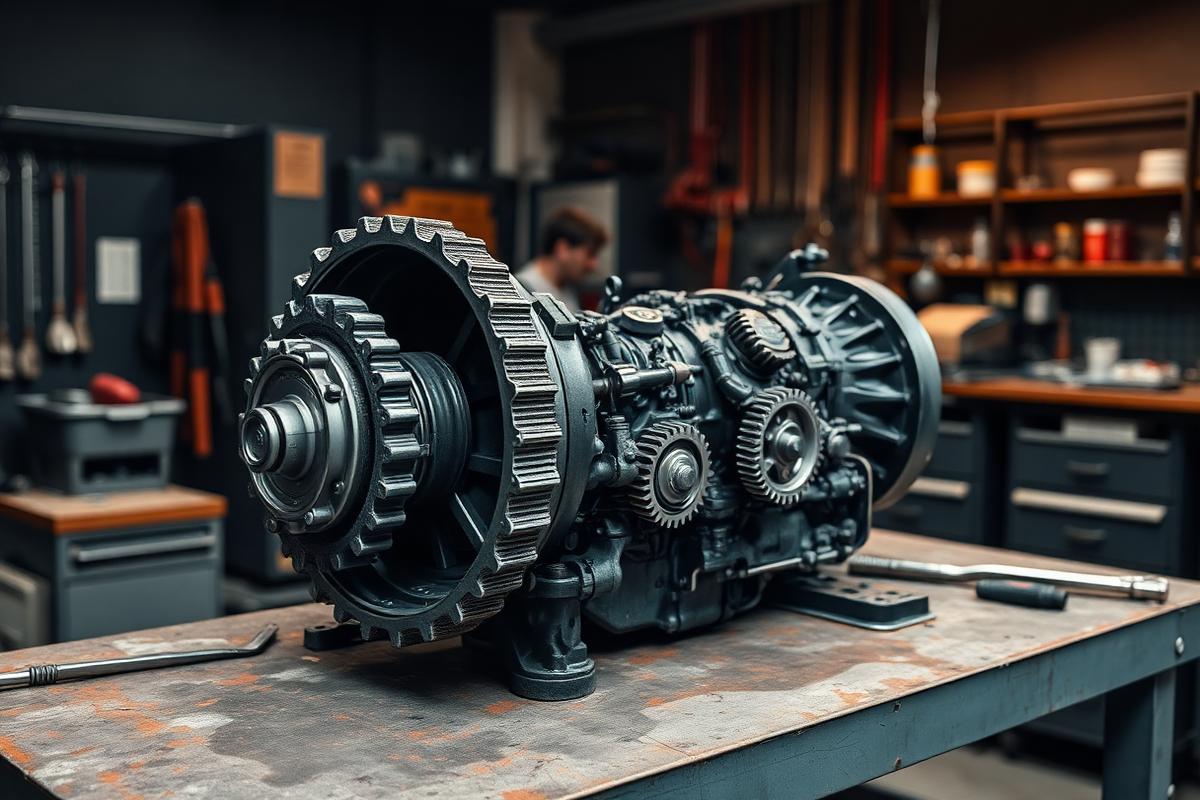
The torque converter sits between the engine and a conventional automatic gearbox, using transmission fluid to transmit power smoothly and allow the car to idle in gear without stalling. Inside it is a lock-up clutch that engages once you are up to speed, connecting engine and gearbox directly for better efficiency. It is a simple idea executed with tight tolerances, and when those tolerances are lost, the symptoms are usually unmistakable once you know what to look for.
Manchester Clutch Specialist diagnoses and replaces torque converters across a wide range of automatic transmissions, including ZF 6HP and 8HP units and Aisin gearboxes. We do not rebuild torque converters — they are sealed units — but we assess whether a fault is contained to the converter, the fluid, or has spread into the gearbox itself before recommending any repair.
Lock-up shudder
The single most common torque converter complaint is a light vibration or shudder, typically felt between 30 and 45mph under light, steady throttle, at the point where the lock-up clutch engages. It can feel like driving over rumble strips, or like a misfire that only appears at a specific speed.
Shudder has three common causes, and separating them matters because the fix is different for each:
- Degraded transmission fluid. Fluid that has lost its friction modifiers over time or through overheating can cause the lock-up clutch to engage unevenly even when the converter itself is sound. A fluid and filter service is often enough to resolve this if caught early.
- Worn lock-up clutch material. The clutch inside the converter wears like any friction surface, and once worn, no amount of fresh fluid will fully resolve the shudder.
- Internal converter damage. Damage to the converter's internal components, sometimes from earlier contamination or overheating, requires replacement of the unit.
Stall speed and what it tells us
Stall speed is the engine rpm reached with the brake held firmly and the transmission in drive, before the converter begins multiplying torque to the wheels. Every vehicle has a manufacturer specification for this figure, and a stall test forms part of a proper torque converter diagnosis.
- Stall speed higher than specification usually points to internal converter slip, where the fluid coupling is not transmitting power efficiently.
- Stall speed lower than specification can indicate engine performance issues rather than the converter, or a converter that is partially locking when it should not be.
This test, combined with fault code data and a road test, is how we work out whether the converter, the fluid, or the wider transmission is the actual source of a fault, rather than guessing from symptoms alone.
Fluid contamination and why it spreads
When a torque converter's lock-up clutch or internal seals begin to wear, the debris generated does not stay contained. It circulates with the transmission fluid and can reach the valve body, solenoids and clutch packs elsewhere in the gearbox. This is particularly relevant on units like the ZF 6HP and 8HP, where a converter fault left untreated has a well-documented tendency to contaminate the valve body and turn a single-component fault into a full transmission repair.
This is why we treat converter shudder or stall speed faults as urgent rather than cosmetic. Catching contamination early can mean the difference between replacing a converter and replacing the whole transmission. Our gearbox jumping out of gear guide and gearbox grinding guide cover some of the further symptoms that can develop if contamination is left unaddressed.
ZF and Aisin transmissions
ZF 6HP and 8HP transmissions are widely used across BMW, Audi, Jaguar Land Rover and others, and lock-up shudder linked to converter wear and fluid condition is a familiar fault on higher-mileage examples. Aisin transmissions, fitted by Toyota, Lexus, Volvo and several other manufacturers, are generally considered robust, but the lock-up clutch inside the converter still wears over very high mileages and is not immune to fluid contamination issues.
In both cases we identify the specific transmission code fitted to your vehicle before sourcing a replacement converter, since fitment is not always interchangeable across model years even within the same family.
What replacement involves
Replacing a torque converter means separating the transmission from the engine, as the converter sits between the two and bolts to the flexplate. As part of the job we replace transmission fluid and filters, inspect the flexplate for cracks or damage, and check the valve body and clutch packs for signs of contamination before refitting. If contamination has already reached those components, we will tell you before proceeding rather than fitting a new converter into a compromised gearbox.
Costs and turnaround
Torque converter replacement costs depend on the transmission fitted and on whether the wider gearbox has been affected by contamination. We give a fixed price once diagnosis, including a stall speed test and fluid inspection, is complete. Most jobs are booked in for an agreed number of days, with courtesy vehicles available on request.
Torque converter replacement across Greater Manchester
We diagnose and replace torque converters for drivers across Manchester, Salford, Oldham, Stockport, Trafford, Tameside, Rochdale, Bury, Bolton and the wider North West. If your vehicle uses a dual-clutch or CVT gearbox instead of a conventional torque converter automatic, see our DSG transmission replacement page or our CVT transmission replacement page. For the full picture on automatic gearbox work, visit our automatic transmission replacement service, or get in touch for a diagnosis and a fixed quote.