Most drivers press their clutch pedal thousands of times without thinking about it, so a change in effort tends to stand out quickly. Sometimes it creeps in gradually over months, sometimes it appears within a day or two of a fluid top-up or a cold snap. Either way, it is worth taking seriously, because a heavy pedal is the mechanism telling you something in the clutch or its operating system is no longer working as it should.
It helps to be precise about what you are feeling. A pedal that is heavy throughout its travel but still engages predictably is a different problem to one that is heavy and paired with a high biting point, and different again to one that goes from heavy to suddenly light with no warning.
What causes a heavy or stiff clutch pedal
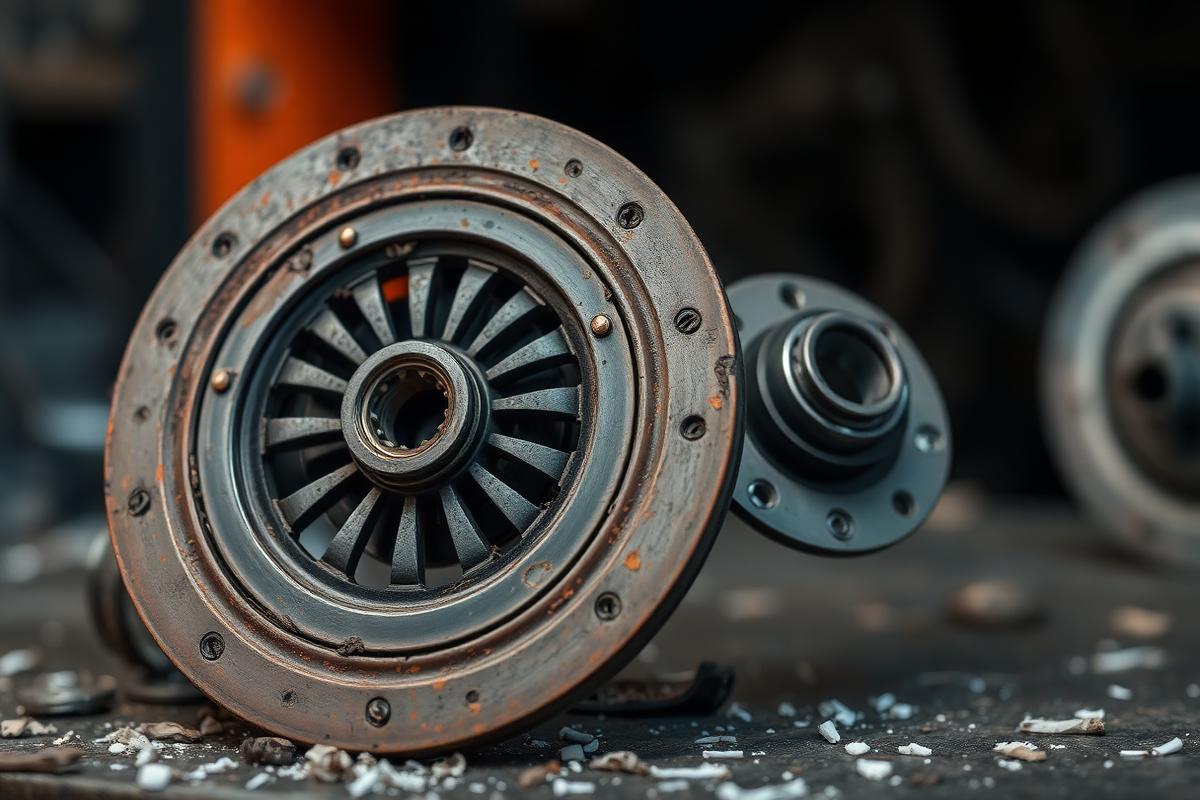
- A worn diaphragm-spring pressure plate. As the friction plate wears thin, the pressure plate's diaphragm fingers move outside their designed geometry. Rather than working at the sweet spot in their travel, they operate at an angle that needs more force to press, which is why pedal effort often increases as a clutch nears the end of its life.
- A seized or stretched clutch cable. On older cable-operated cars, a cable that has stretched, frayed internally, or seized inside its outer sheath from corrosion needs considerably more effort to pull. A dry, ungreased pedal pivot on the same cars adds friction at the point where the pedal meets the linkage.
- A binding hydraulic master or slave cylinder. On hydraulic systems, a seized piston, worn seals, or contaminated fluid inside the master or slave cylinder increases the resistance the pedal has to overcome, making the whole pedal feel heavy and sometimes notchy or inconsistent.
- A seized release bearing or dry guide sleeve. The release bearing rides on a guide sleeve around the gearbox input shaft. If that sleeve dries out or the bearing itself starts to seize, the extra drag is transmitted straight back through the pedal.
- Gearbox mounts and linkage issues. A collapsed or worn gearbox mount can let the gearbox shift slightly under load, altering the geometry of the clutch linkage or fork and making the pedal feel heavier or less consistent than it should, even though the clutch itself is fine.
Heavy but working, heavy with a high biting point, or heavy then light
These three patterns point in different directions. A pedal that is simply heavier than it used to be, but still engages at a normal, consistent point, is more likely to be a cable, pivot or hydraulic drag issue rather than a worn clutch. Lubrication or a cylinder replacement often resolves it.
A pedal that is both heavy and biting much higher than it used to — engaging close to the top of its travel rather than in the middle — is the classic sign of a worn clutch assembly, exactly as described in our clutch slipping and symptoms guide. In that case the heaviness comes from the diaphragm spring operating outside its intended range, and a replacement clutch is the usual fix.
A pedal that feels heavy and then suddenly drops to the floor with little resistance is a different fault altogether, and usually means a hydraulic failure such as a burst pipe or a failed master or slave cylinder seal. If this happens, do not continue driving. Our clutch pedal stuck to the floor guide covers that fault specifically.
Is it safe to drive?
A gradually heavier pedal that still engages consistently is generally safe to drive on for a short period while you arrange an inspection, though it will only get heavier with time as wear progresses. A pedal that is both heavy and biting high should be treated with more urgency, since a worn clutch can start to slip without warning under load. Any sudden change in pedal effort, or a pedal that feels inconsistent from one press to the next, is worth booking in promptly rather than waiting.
How we diagnose it
We start by identifying whether the car is cable or hydraulically operated, then check pedal travel, biting point, and pedal feel through a full stroke. On hydraulic systems we check fluid condition and look for external or internal leaks at the master and slave cylinders. On cable systems we check the cable itself for stretch, fraying and free movement inside its sheath, and the pedal pivot for wear or lack of lubrication.
What we look for
- Pedal travel and biting point compared with normal range for the vehicle
- Hydraulic fluid condition, level and evidence of internal or external leaks
- Cable condition, routing and pedal pivot lubrication on cable-operated cars
- Release bearing and guide sleeve for drag or seizure
- Gearbox mount condition where pedal feel is inconsistent
What it costs to fix
A dry pedal pivot or a seized cable is usually a low-cost repair. A master or slave cylinder replacement is a moderate job, priced against your specific vehicle. If the underlying cause is a worn clutch assembly, a standard clutch replacement typically costs between £450 and £850 fitted — see our clutch replacement cost guide for a fuller breakdown by vehicle type. If a gearbox mount or linkage fault is involved, we cover that as part of our wider gearbox repair work.
Covering Manchester and the surrounding areas
If the pedal feel is fine but the clutch only engages at the very top, read our guide to a high clutch biting point.
We diagnose and repair heavy or stiff clutch pedals for drivers across Manchester, Salford, Oldham, Stockport, Trafford, Tameside, Rochdale, Bury, Bolton and the wider North West, with a free inspection before any quote. Get in touch and describe how the pedal feels and we will tell you honestly what is likely going on before you book anything in.