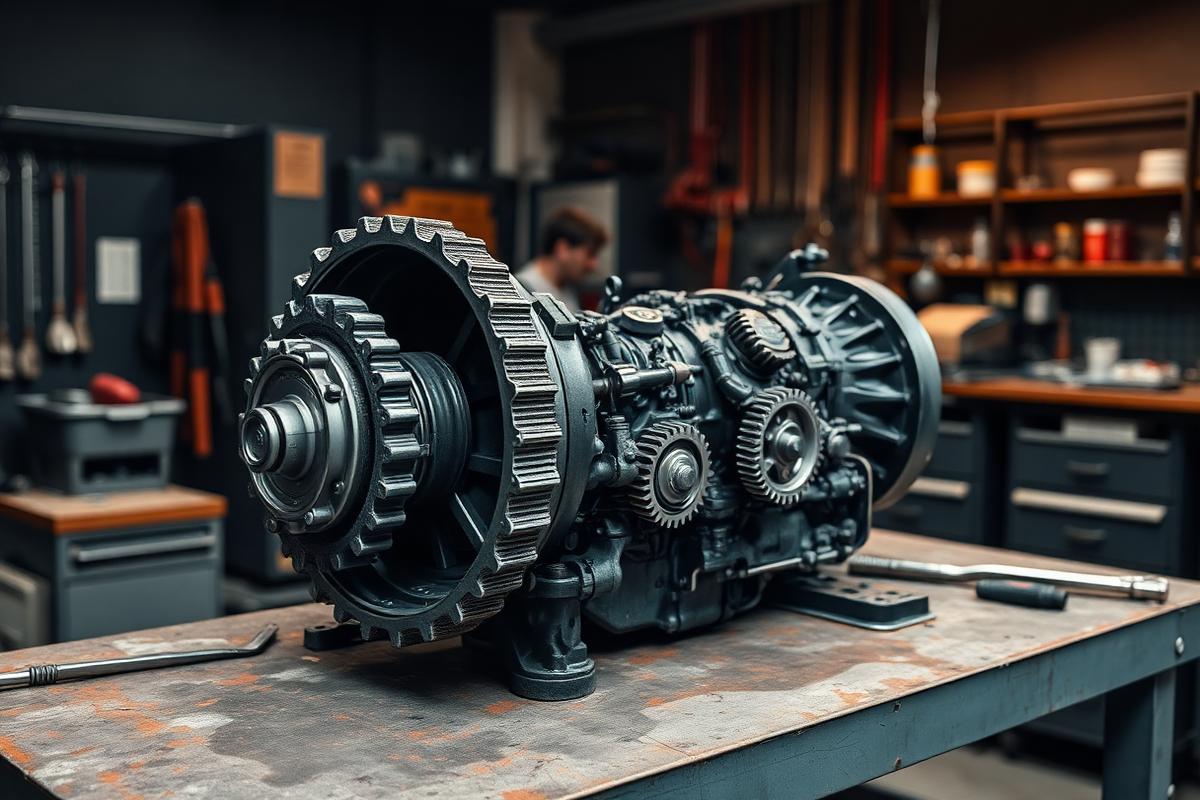
DSG — Direktschaltgetriebe, marketed by Audi as S tronic — is the dual-clutch automatic fitted across most of the Volkswagen Group range, including VW, Audi, Skoda and SEAT. It drives well when healthy: fast shifts, no torque converter slip, good economy. When it develops a fault, the symptoms can look identical whether the problem is a two hundred pound sensor or a transmission that needs replacing, which is exactly why a proper diagnosis matters before any work is agreed.
Manchester Clutch Specialist diagnoses and replaces DSG, S tronic and other automatic transmissions across Greater Manchester. We do not rebuild gearboxes — we assess what has actually failed, repair the parts that are genuinely contained and cost-effective to fix, and replace the transmission where the damage runs deeper than that.
DQ200 dry clutch versus DQ250 wet clutch
Not all DSG gearboxes are built the same way, and the difference matters enormously for both symptoms and cost.
- DQ200 (dry clutch, 7-speed). Fitted to lower-torque petrol models. Uses two dry clutch packs, similar in principle to a manual clutch, with no fluid bathing the clutch material. Dry clutches wear faster in heavy stop-start traffic and are the gearbox most associated with the low-speed jerkiness DSG has become known for.
- DQ250 (wet clutch, 6-speed). Fitted to higher-torque petrol and diesel models, including many four-wheel-drive variants. The clutch packs run in oil, which cools them and generally makes them more durable, but the mechatronic unit and clutch pack still wear and can fail, particularly if service intervals have been missed.
Knowing which variant is fitted to a specific car changes what we look for first, and it changes the likely repair cost. We confirm it from the vehicle before quoting rather than assuming from the model name.
Common DSG and S tronic symptoms
- Jerking or shuddering pulling away. Most common on DQ200 dry-clutch cars, caused by worn or contaminated clutch material struggling to engage smoothly.
- Warning light with reduced gear selection. The transmission control unit has detected a fault and limited functionality to protect the gearbox — this is limp mode, not a diagnosis in itself.
- Delayed or harsh gear changes. Points towards mechatronic pressure regulation issues or worn clutch packs, depending on when the harshness occurs.
- Whining or knocking from the transmission. Suggests wear has reached gears or bearings inside the casing rather than the clutch packs or mechatronic unit.
- Failure to select a gear at all. Can be a mechatronic fault, a clutch pack that has failed completely, or an internal mechanical failure — these need a proper diagnostic read to separate.
If any of this sounds familiar, our gearbox whining noise guide and gearbox jumping out of gear guide cover the manual-gearbox equivalents of some of these symptoms, which is useful context even on a dual-clutch car.
Mechatronic unit, clutch pack or gearbox — how we tell the difference
The mechatronic unit sits on the outside of the DSG casing and controls hydraulic pressure and gear selection electronically. It fails independently of the mechanical gearbox far more often than people expect, and when it does, a mechatronic replacement or reconditioned unit can resolve the fault without opening the transmission at all.
The clutch packs sit inside the casing and are the wearing item equivalent to a conventional clutch. On a DQ200 dry-clutch gearbox in particular, clutch pack wear is a known and common failure, and it is a repair that can often be carried out without replacing the whole transmission.
Where wear or damage has reached the gears, bearings or synchroniser components inside the casing, the transmission itself needs replacing. We use fault code data, pressure readings and a road test to work out which of these three you actually have before any price is agreed, and we explain the reasoning in plain terms.
What replacement involves
Where a full transmission replacement is the right call, we fit a quality replacement unit matched to your exact vehicle by chassis and gearbox code, since DSG variants are not interchangeable across model years without careful checking. Fluid, filters and seals are replaced as part of the job, and mounts and linkages are inspected, because a worn mount can produce symptoms that mimic an internal fault.
Every job is quoted in writing once we know exactly what is needed. If we start with a mechatronic diagnosis and find the clutch packs are also worn, we tell you before doing further work rather than after.
Costs and turnaround
DSG work spans a wide price range because the three possible repairs — mechatronic, clutch pack, or full transmission — sit at very different price points. A mechatronic replacement is the least invasive and least expensive; a full transmission replacement on a DQ250 wet-clutch unit is a larger job. We give you a fixed figure once diagnosis is complete, and most gearbox work is booked in for a defined number of days agreed upfront.
DSG and S tronic replacement across Greater Manchester
We work on VW, Audi, Skoda and SEAT vehicles for drivers across Manchester, Salford, Oldham, Stockport, Trafford, Tameside, Rochdale, Bury, Bolton and the wider North West. If your fault turns out to be a conventional manual clutch rather than a dual-clutch automatic, we cover that too — see our VW Golf clutch replacement page and our general automatic transmission replacement service. Get in touch for a diagnosis and a straight answer before committing to any repair.