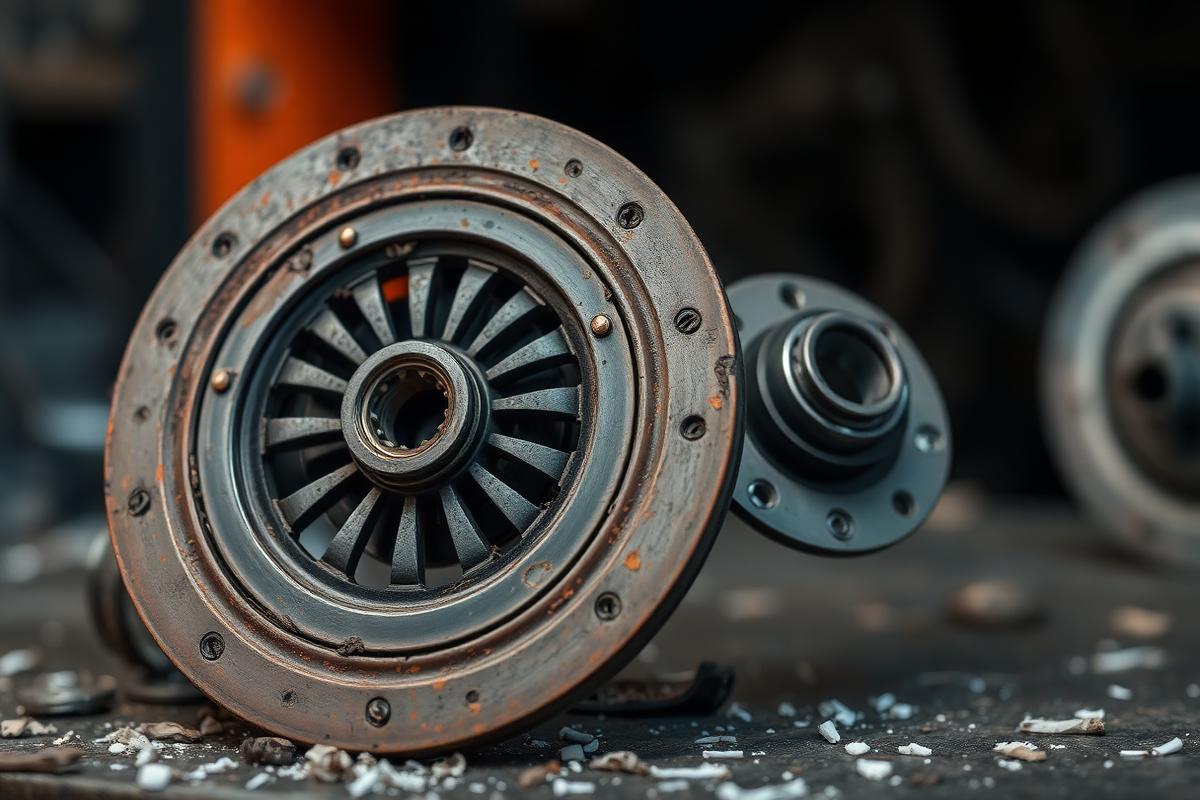
The Golf has been through five distinct generations on our ramps, from the Mk5's PQ34 underpinnings to the Mk8's more integrated electronics, and across TDI diesels, TSI petrols and GTI performance variants. The clutch job itself follows the same broad principle throughout — separate engine from gearbox, replace the friction plate, pressure plate and release bearing, then assess the flywheel — but the detail changes enough between generations and engines that treating every Golf the same is a mistake.
Manual clutch or DSG: check before you book
A large proportion of Golfs sold in the UK have the DSG twin-clutch automatic gearbox rather than a conventional manual. If your Golf has no clutch pedal, the wear item causing shudder or hesitation is one of two clutch packs inside a sealed mechatronic unit, not a traditional clutch assembly, and the diagnosis and repair are entirely different. If that describes your car, our DSG transmission page is the right place to start. This page covers manual gearbox Golfs only.
TDI diesel: dual mass flywheel wear is the norm
The 1.6 and 2.0 TDI engines fitted across the Mk5 to Mk7 Golf range almost universally use a dual mass flywheel to control diesel engine vibration. By the time these cars reach 90,000 to 120,000 miles it's common for the flywheel's internal damping springs to have worn enough to cause judder on take-up or a rattle at idle. We measure every flywheel against Volkswagen's tolerances rather than replacing it as a matter of course — see our VW and Audi dual mass flywheel page for more on how that assessment works.
Common TDI symptoms we see
- Judder pulling away from a stop, particularly noticeable when cold
- Rattling or knocking at idle that reduces as revs rise
- A biting point that has crept noticeably higher over recent months
- A burning smell after repeated hill starts or stop-start traffic
TSI petrol and GTI: torque and clutch specification
The TSI petrol range covers a wide spread of outputs, and the clutch fitted varies accordingly. A 1.0 or 1.5 TSI runs a lighter-duty clutch than a 2.0 TSI GTI or Golf R, which needs a stronger friction plate and pressure plate to cope with significantly more torque. Fitting the wrong specification kit, or a generic pattern part not rated for the engine, is a common cause of premature failure on performance Golfs. We always match the kit to your exact engine code, and where a car has been remapped we discuss uprated options rather than assuming the standard kit will cope.
What the job involves on a Golf
Access varies by generation and drivetrain. Most front-wheel-drive Golfs allow the gearbox to be lowered on a support without removing the subframe entirely, though some models and all 4Motion variants need additional work to create clearance. We confirm access requirements and the resulting labour time during the initial inspection, so the quote you receive is fixed rather than a starting estimate.
- Friction plate, pressure plate and release bearing replaced as a matched kit
- Concentric slave cylinder replaced where fitted, since it sits behind the flywheel
- Dual mass flywheel measured and replaced only if outside tolerance
- Gearbox oil condition checked and topped or replaced as required
Costs and turnaround for Golf clutch work
A standard clutch kit replacement on a Golf typically costs £500 to £750 fitted, depending on engine and access. GTI and Golf R variants sit toward the upper end because of the heavier-duty parts required. Where a dual mass flywheel also needs replacing, expect a further £300 to £600. Most Golfs are booked in and completed within a single working day.
Golf clutch replacement across Greater Manchester
Driving a Skoda? The Octavia shares its engines and gearboxes with the Golf — see our Skoda Octavia and Fabia clutch replacement page.
We replace Golf clutches for drivers across Manchester, Salford, Oldham, Stockport, Trafford, Tameside, Rochdale, Bury, Bolton, and collection and delivery can usually be arranged within about fifteen miles of our workshop. If you're weighing up whether your symptoms point to the clutch, our clutch slipping symptoms guide is a useful first step, and contacting us for a free quote costs nothing.