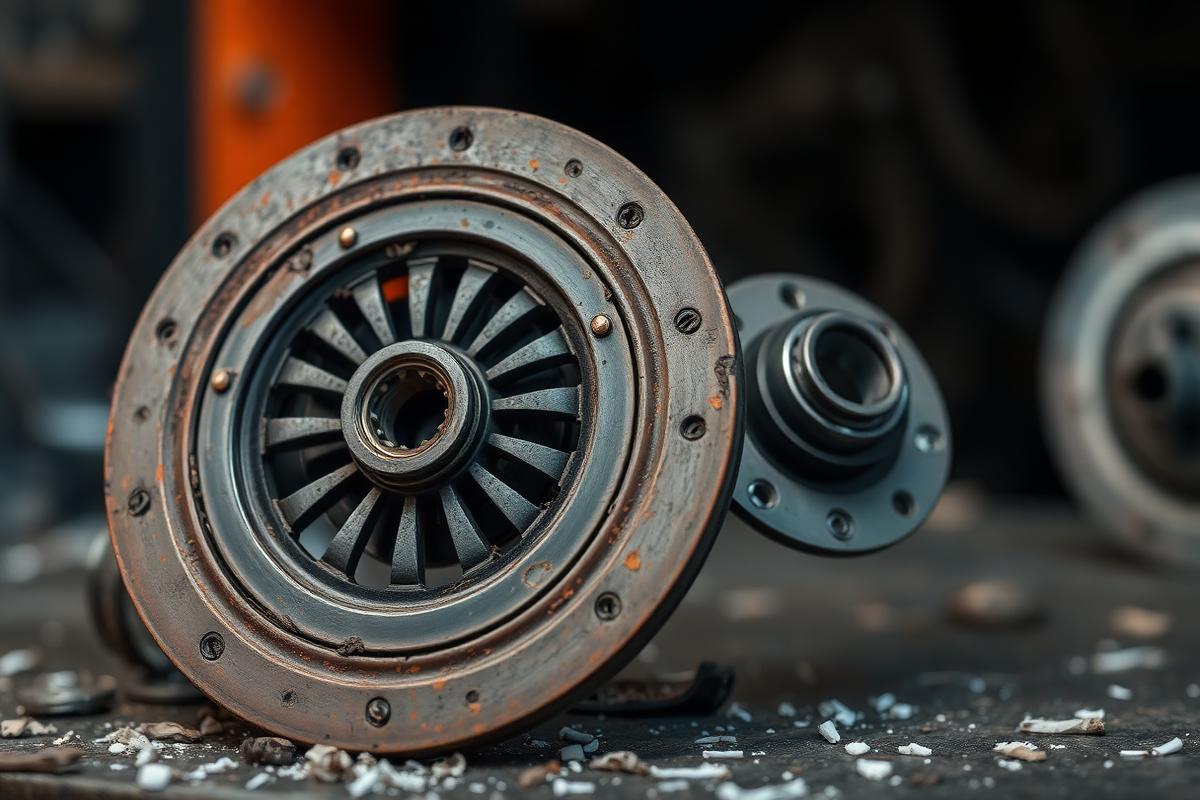
Ford's TDCi diesel engines have powered the Focus, Fiesta, Mondeo and Transit for close to two decades, and across that range the dual mass flywheel is one of the most common reasons for a car or van coming in with a rattle at idle. We work on the full range, from a Fiesta doing the school run to a Transit Custom doing 300 miles a day, and each gets the same measurement process before we commit you to a new flywheel.
Focus and Fiesta TDCi
The 1.6 and 2.0 TDCi engines fitted across several generations of Focus and Fiesta are well documented for dual mass flywheel wear, typically becoming noticeable from around 90,000 miles. The pattern is familiar: a diesel rattle at idle in neutral that quietens when the clutch pedal is pressed, sometimes with a shudder as the car pulls away from a standstill.
Because the same symptoms can point at a worn clutch, a failing release bearing or even an engine mount, we don't replace a flywheel on the strength of a phone description. Our Focus and Fiesta clutch replacement page and symptoms guide cover how to tell them apart before booking in.
Mondeo
The Mondeo shares much of the same TDCi engine family and shows the same failure pattern, often combined with more noticeable vibration through the cabin given the car's size and typical high-mileage motorway use. A judder pulling away that persists after a clutch replacement is a strong indicator the flywheel needs measuring.
EcoBoost petrol engines
The 1.0 and 1.5 EcoBoost units are generally kinder to the flywheel than the diesels, but higher-mileage examples do present with the same rattle-and-judder pattern, particularly where the car has covered a lot of short journeys. We measure EcoBoost flywheels with the same process rather than assuming petrol power rules out the fault.
Transit and Transit Custom vans
Commercial use is harder on a dual mass flywheel than private car use. Frequent stop-start driving, heavy payloads and towing all increase the torsional load the flywheel absorbs on every cycle, and we see Transit and Transit Custom flywheels needing attention somewhat earlier than the equivalent car engines. Van clutch and flywheel parts also tend to cost more than car equivalents given the size of the unit.
For operators running vans hard, we sometimes discuss a solid flywheel conversion, which removes the failure mode entirely at the cost of more noise and vibration in the cab. See our Transit clutch replacement page for more on keeping a commercial vehicle on the road with minimal downtime.
How we assess a Ford dual mass flywheel
With the gearbox removed, we measure:
- Free rotational travel of the secondary mass against Ford's specified tolerance for the engine code.
- Axial and radial rock at the internal bearing.
- Friction surface condition, checking for heat damage, scoring and minimum thickness.
You get the readings and photographs, and a flywheel that's within tolerance goes back on rather than being replaced as a matter of routine.
Cost and turnaround
Combined clutch and DMF replacement on a Fiesta or Focus typically runs from around £850 to £1,300 fitted, a Mondeo slightly higher, and Transit or Transit Custom vans generally £1,100 to £1,800 fitted depending on size and specification. Full detail on what drives these figures is in our clutch replacement cost guide. Most cars are turned around within one working day, vans sometimes needing longer depending on access, and every job carries our 12-month parts and labour guarantee.
Ford specialists across Manchester
We work on Ford cars and vans from Manchester, Salford, Oldham, Stockport, Trafford, Tameside, Rochdale, Bury, Bolton and beyond, including fleet and courier vehicles that need fast, reliable turnaround. Get in touch with your registration and the noise you're hearing for a free assessment.