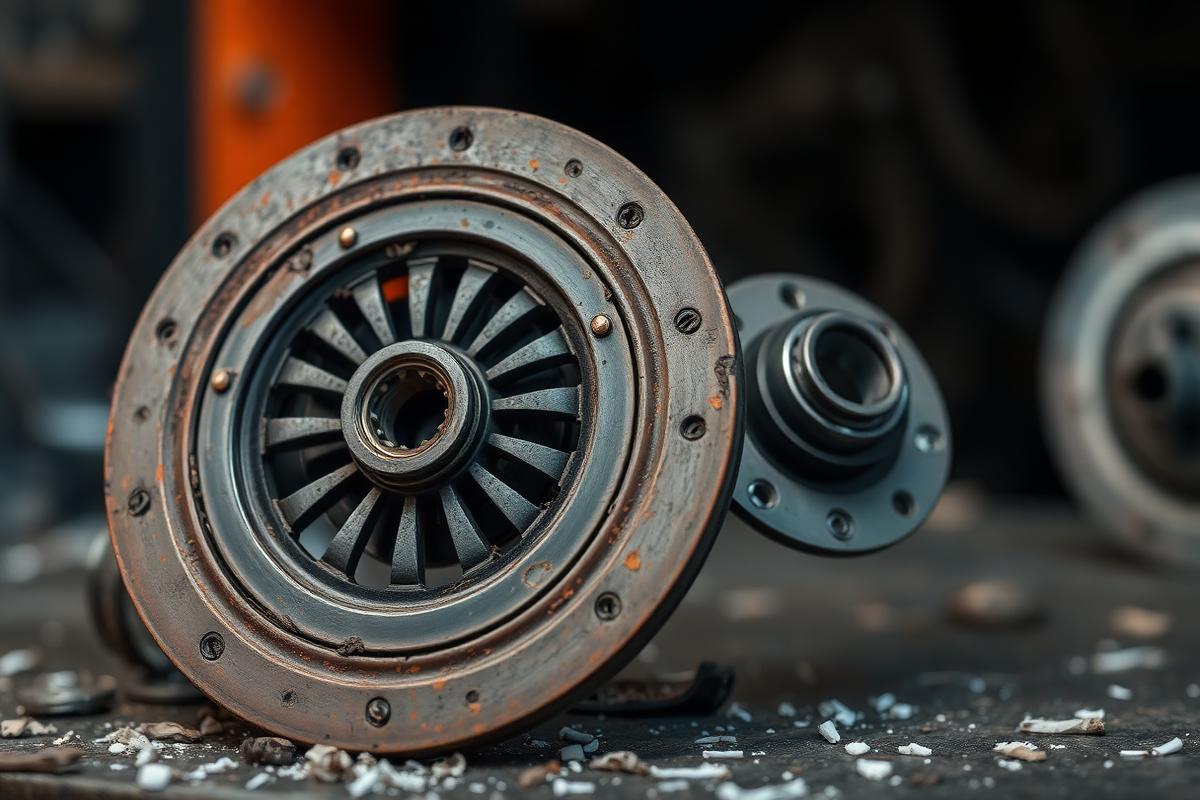
There is a particular moment drivers describe: pressing the clutch as normal, feeling it go soft or simply sink, and then finding it will not come back up on its own. The car usually cannot select gears properly from that point, sometimes it is stuck in whatever gear it was already in. It feels like a major mechanical failure, and it can happen with no warning at all.
The reassuring part is that this symptom points almost exclusively at the hydraulic system that operates the clutch, rather than the clutch friction plate, pressure plate or flywheel. Those parts can still be in good condition when this happens.
How the hydraulic system works
Most modern cars operate the clutch hydraulically rather than with a cable. Pressing the pedal pushes a piston in the master cylinder, which forces fluid through a pipe to a slave cylinder. That slave cylinder either sits externally on the gearbox bellhousing and operates a release arm, or, on many newer cars, is built into the bellhousing itself around the gearbox input shaft as a concentric slave cylinder (CSC). Either way, if the system loses fluid or a seal fails internally, pressure cannot build, and the pedal has nothing to push against.
Common causes of a pedal stuck to the floor
- A failed master cylinder. Internal seals wear over time. Once a seal fails, fluid bypasses inside the cylinder instead of building pressure, and the pedal feels dead.
- A failed slave cylinder. The same wear happens at the other end of the system. An external slave cylinder can also leak visibly onto the bellhousing.
- A failed concentric slave cylinder. Common on many Ford, Vauxhall, VW Group and PSA vehicles. Because it sits inside the bellhousing, there is no external leak to spot; the first sign is often the pedal simply failing.
- A burst or perished hose or pipe. Rubber sections perish with age and can split suddenly, especially in cold weather.
- Air in the system. Air compresses where fluid does not, producing a spongy pedal that can eventually feel like it has no resistance at all.
- Low or contaminated fluid. A slow leak that has gone unnoticed can eventually drop the reservoir level low enough that the system cannot function.
Less commonly, a broken clutch cable causes similar symptoms on older vehicles without hydraulic actuation, and very occasionally a snapped release fork or a genuinely disintegrated friction plate can produce a pedal with no resistance. This is why a proper diagnosis matters rather than assuming it is always hydraulic.
Is it safe to drive?
No. Without hydraulic pressure the clutch cannot disengage reliably, which means gear changes cannot be made safely and the car may not hold neutral properly at a standstill. Driving in this condition risks damage to the gearbox and is unsafe in traffic. If this happens while you are out, find somewhere safe to stop and arrange recovery rather than trying to nurse the car home.
What it costs to fix
The cost depends entirely on which component has failed. An external master or slave cylinder is a comparatively straightforward job — remove and replace the cylinder, bleed the system, and confirm pedal feel is restored. It is typically one of the more affordable repairs we carry out, well below the cost of a clutch replacement.
A concentric slave cylinder is a different scale of job, because it sits inside the bellhousing and the gearbox has to be removed to reach it — the same labour as a clutch replacement. Where that is the case, we replace the clutch kit at the same time, since the labour to access it has already been spent and the existing clutch will be at a similar stage of wear. In that situation, expect costs broadly in line with a standard clutch replacement, from £450 to £850 fitted, rather than a separate smaller bill.
How we diagnose it
We start by checking the fluid reservoir and looking for obvious external leaks at the master cylinder, pipework and any external slave cylinder. If nothing is visible externally and the system will not hold pressure, that points strongly at a concentric slave cylinder or an internal master cylinder failure, which we confirm before quoting. We would rather spend twenty minutes confirming the actual fault than replace parts on a guess.
If your pedal feels merely soft or spongy rather than fully gone, that is often air in the system or the early stages of a seal failure — worth booking in before it fails completely. Our clutch slipping and symptoms guide covers the wider range of clutch-related warning signs if you are not sure which one applies to your car.
Covering Manchester and the surrounding areas
We diagnose and repair clutch hydraulic faults for drivers across Manchester, Salford, Oldham, Stockport, Trafford, Tameside, Rochdale, Bury, Bolton and the wider North West, with recovery advice given over the phone if your pedal has just failed. If the clutch itself does need replacing at the same time, that work is carried out in the same visit rather than requiring the car to come back a second time. We also handle related transmission faults through gearbox repair and replacement. Get in touch and we will talk you through next steps.