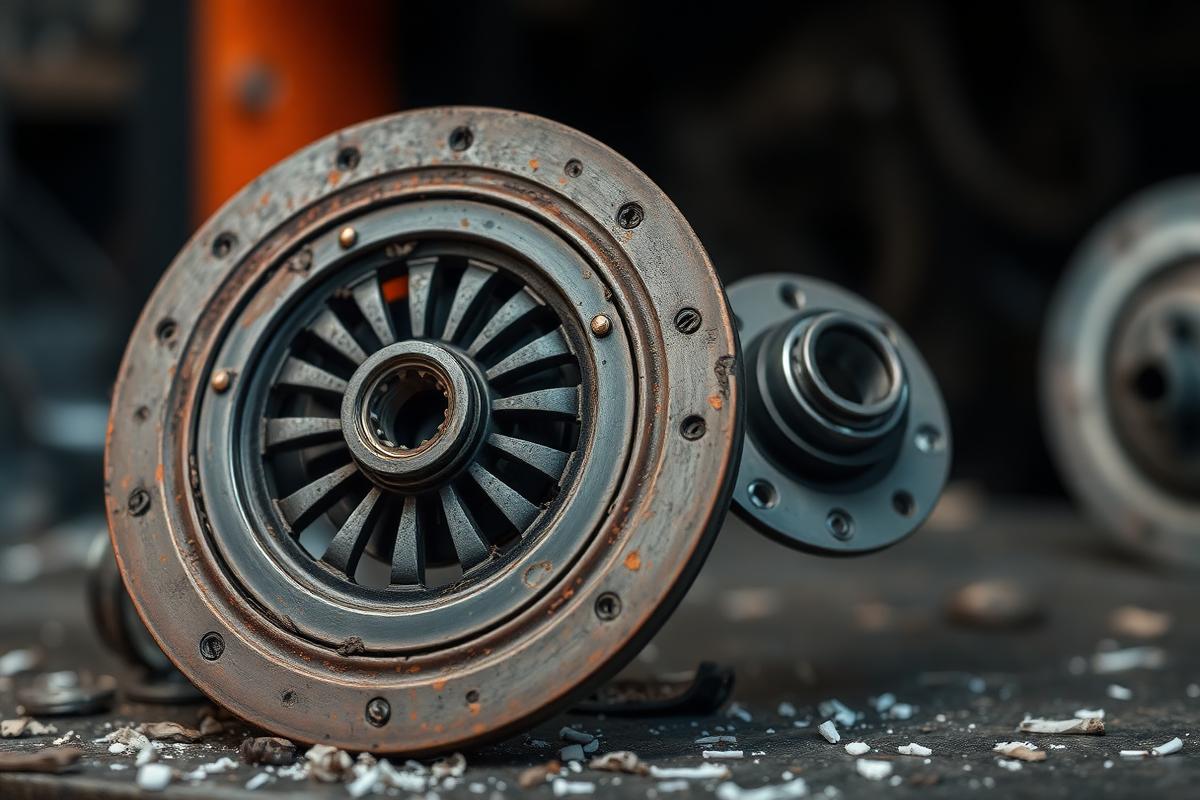
Clutch faults are unnerving because they get worse gradually, and because everyone has heard a story about a four-figure bill. The good news is that a fair number of the symptoms below turn out to be something much cheaper than a clutch replacement — a hydraulic fault, a leaking seal, an engine mount. The trick is knowing which is which.
This is the same reasoning we work through on every car that comes into our Manchester workshop.
Symptom 1: The clutch is slipping
What it feels like: engine revs rise but road speed doesn't follow. Most obvious in the higher gears, accelerating hard, going uphill or with a loaded car. Often accompanied by a hot burning smell.
The handbrake test: somewhere safe and legal, handbrake firmly on, engine idling, select third or fourth and raise the clutch slowly. A healthy clutch stalls the engine almost immediately. If it keeps running, the clutch is slipping.
Usual cause: a worn friction plate. Occasionally a hydraulic fault preventing full engagement, or oil contamination on the plate.
Urgency: high. Slipping generates heat, and heat damages the flywheel. Left too long, a clutch replacement becomes a clutch and flywheel replacement.
Symptom 2: Judder pulling away
What it feels like: the car shudders or hops as the clutch takes up, frequently worse when cold, on a hill or in reverse.
Usual causes: oil contamination on the friction plate from a leaking rear crankshaft seal or gearbox input shaft seal; a heat-damaged or warped flywheel surface; a failing dual mass flywheel; or worn engine and gearbox mounts.
Worth knowing: mounts are cheap and are frequently the whole story. Any competent inspection should rule them out before quoting for a clutch. Equally, if the judder is caused by a leaking seal, fitting a new clutch without replacing that seal guarantees the fault returns.
Symptom 3: High or vague biting point
What it feels like: the clutch engages right at the top of the pedal travel, where it used to bite in the middle.
Usual causes: a worn friction plate — as the material thins, the pressure plate fingers sit further out. But it can also be air in the hydraulic system, a failing master or slave cylinder, or on older cars a stretched clutch cable.
Worth knowing: the hydraulic causes are a fraction of the cost of a clutch. Always get them ruled out.
Symptom 4: Noise when you press or release the pedal
Rumble or squeal that appears when you press the pedal and clears when you release it points at the release bearing. It's replaced as part of any clutch kit.
Rattle at idle that disappears when you press the pedal is the signature of a worn dual mass flywheel — the classic "diesel rattle at tickover" that goes quiet the instant the clutch is dipped.
A squeak that follows pedal movement is often just a dry pivot or pedal box bush, which costs almost nothing to sort.
Symptom 5: Difficulty selecting gears
What it feels like: reverse crunches or refuses to engage from stationary; first is a fight; the box crunches going into every gear.
Usual cause: the clutch isn't fully disengaging — commonly a hydraulic problem, a stretched cable or a warped friction plate.
Important distinction: if it only crunches into one specific gear, that 's a synchroniser inside the gearbox, not a clutch fault. See gearbox diagnosis and replacement.
Symptom 6: Burning smell
A sharp, acrid smell like scorched paper is overheating friction material. Once after a genuinely brutal hill start can be normal. During ordinary driving, it means the clutch is slipping and needs looking at now.
Symptom 7: Pedal to the floor and stays there
Almost always hydraulic — a failed master or slave cylinder, or a lost seal. Don't drive it. It's also one of the cheaper faults on this list, so it's worth a proper diagnosis rather than assuming the worst.
Symptom 8: Vibration at low revs
A vibration through the floor and pedals between roughly 1,200 and 1,800 rpm in a high gear, or a shake as the engine starts and stops, points at the dual mass flywheel rather than the clutch itself.
Quick reference
- Revs rise, speed doesn't → slipping clutch. Book it in.
- Shudder pulling away → contamination, flywheel or mounts.
- Rattle at idle, quiet on the pedal → dual mass flywheel.
- Rumble on the pedal → release bearing.
- Crunch into one gear only → gearbox synchro, not the clutch.
- Pedal sinks to the floor → hydraulics. Often cheap.
- Biting point crept upwards → worn plate, or hydraulics.
How to make your next clutch last longer
Don't ride the pedal — resting a foot on it partially disengages the plate and wears it constantly. Use the handbrake on hills instead of balancing the car on the clutch. Go into neutral at long lights rather than sitting with the pedal down. Avoid labouring the engine in too high a gear, which hammers the flywheel springs. And change gear decisively rather than slipping the clutch through the change.
Get it checked before it gets expensive
We road test and inspect free of charge, and we'll tell you honestly if the answer is a £150 hydraulic repair rather than a £700 clutch. We cover Manchester, Salford, Oldham, Stockport, Trafford, Tameside, Rochdale, Bury, Bolton and the wider North West. Describe what your car is doing and we'll give you a straight answer, or read more about what a clutch replacement involves and automatic transmission faults.