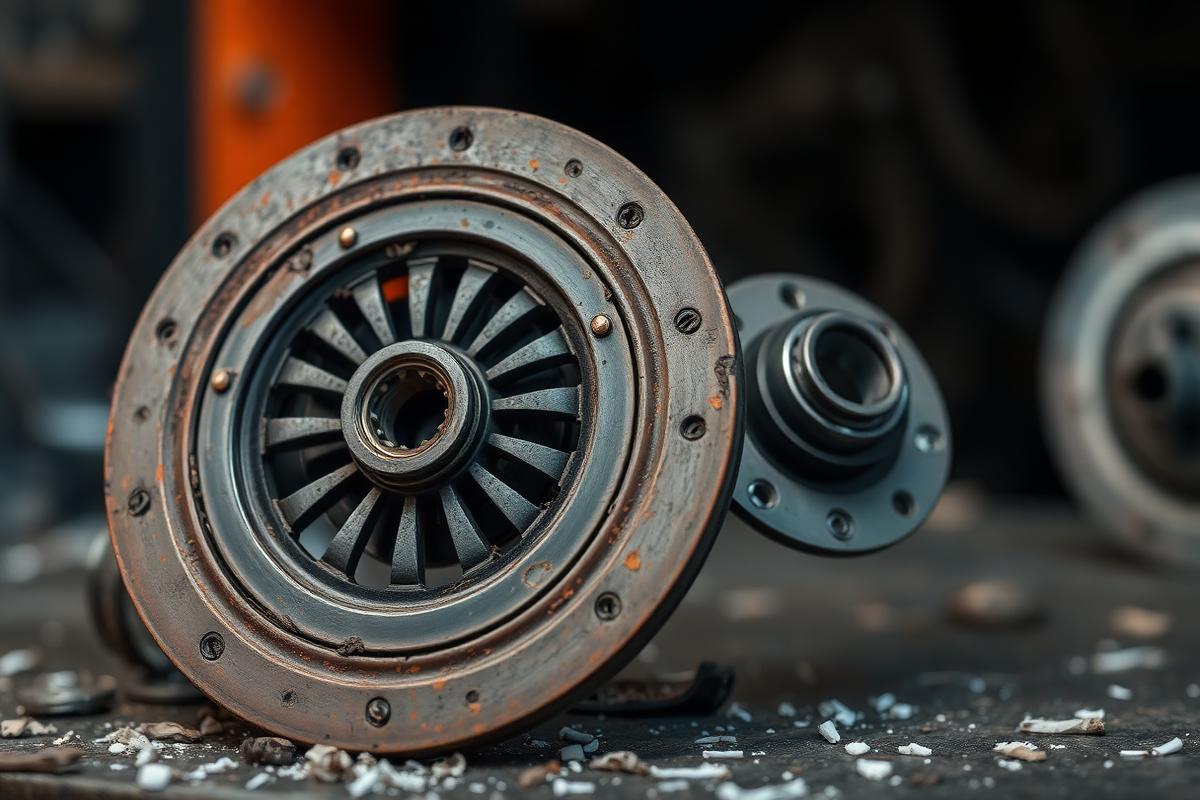
The biting point is where the clutch starts to grip as you lift the pedal. On a healthy clutch it sits somewhere around the lower to middle part of the pedal's travel. When drivers tell us the car "only goes at the very top," they are describing one of the most common early warnings of clutch wear — and often the first one that is noticeable before any slipping starts.
Why the biting point rises as a clutch wears
Most cars built in the last twenty years use a self-adjusting pressure plate. As the friction material on the clutch plate wears thinner, the pressure plate compensates to keep the clamping force right. The side effect is that the point where the clutch engages gradually moves up the pedal. It happens slowly, over tens of thousands of miles, which is why many drivers only notice it when they drive another car with a fresh clutch, or when someone else drives theirs.
A high bite on its own does not mean the clutch has failed. It means it is getting closer to the end of its friction material. The next stage is slipping — revs rising without the car accelerating, most noticeably in higher gears or up a hill. Our guide to clutch slipping symptoms covers that stage in detail.
When it is not the clutch at all
A high biting point does not automatically mean a new clutch. On hydraulic systems, the pedal pushes fluid from the master cylinder to a slave cylinder that operates the release bearing. Anything that stops that system moving the bearing its full distance can change where the clutch bites. Common causes we find include:
- Air in the clutch hydraulics, often after other work or a slow leak
- A master cylinder with worn internal seals, losing pressure as you hold the pedal
- An external slave cylinder that is leaking or sticking
- Old, moisture-laden brake fluid in a shared reservoir
- A stretched or poorly adjusted clutch cable on older cable-operated cars
The clue is usually consistency. A worn clutch moves the bite up steadily and it stays there. A hydraulic fault tends to wander — high one day, normal the next, worse after sitting, or a pedal that feels soft or spongy. If the pedal has also become stiff, see our page on a heavy clutch pedal; if it has dropped to the floor, see clutch pedal stuck to the floor.
How we diagnose a high biting point
1. Road test
We drive the car with you, checking where the clutch bites, whether it slips under load in a high gear at low revs, and whether there is judder on take-up or noise at idle that might point to the flywheel.
2. Hydraulic check
We look at the fluid level and condition, check the master and slave cylinders for leaks, and feel for a pedal that sinks under steady pressure. If the hydraulics are at fault, that is what we quote for — not a clutch.
3. Honest recommendation
If the friction plate is worn, we tell you how urgent it is. If it is not slipping yet, you may have time to plan the work around your diary rather than wait for a breakdown. Our clutch repair page explains in more detail which faults we can fix without a new clutch.
Is it safe to keep driving?
In the short term, a high bite without slipping is not dangerous. The risks come later. Once the clutch starts to slip, every slip creates heat that glazes the friction surface and wears it faster. Eventually it can slip so badly that the car will not climb a hill or pull away with a load. Slipping also overheats the flywheel, and on cars with a dual mass flywheel that can turn a clutch job into a clutch-and-flywheel job.
What it costs
If the cause is hydraulic, a bleed or a replacement master or external slave cylinder is typically well under £250. If the clutch itself is worn, a full kit usually costs £450 to £800 fitted depending on the car, with more where a dual mass flywheel is also worn. Our clutch replacement cost guide breaks this down by vehicle type. Every quote is a single fixed figure after inspection.
High clutch biting point checks across Greater Manchester
We diagnose clutch faults for drivers across Manchester, Salford, Oldham, Stockport, Trafford, Tameside, Rochdale, Bury, Bolton. If it turns out the clutch does need replacing, our clutch replacement service covers it, usually in a single day.
Book a check or ask for a free quote and we will tell you plainly whether it is the clutch, the hydraulics, or nothing to worry about yet.